Journal

佛舍利之謎 Mystery of the Piprahwa gems

Some months ago, my Indian colleagues asked me to write an article commenting on the (non)response of local Chinese Buddhists to the planned auction of the Piprahwa gems in Hong Kong earlier this year. The gist of my paper is that contact relics, such as the Piprahwa gems, are not considered the same as the Buddha’s bodily relics. Without a continuous history of worship, they are just archaeological discoveries of antiquarian, not spiritual, interest.

My questions, however, turned to India: How should contact relics such as the Piprahwa gems be returned to the Buddhist communities? Since the Peppé family received from the British colonial government only 20% of the gems, what happened to the remaining 80% retained by Indian museums?
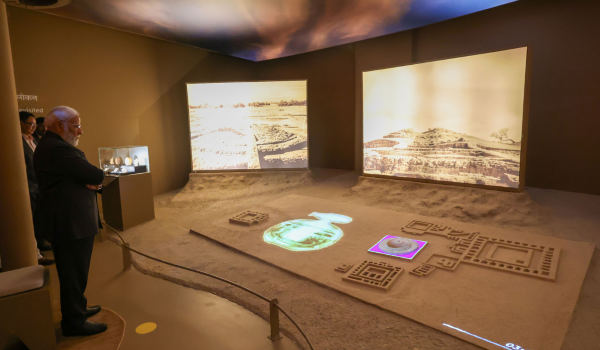
PM Modi inaugurates Grand International Exposition of Sacred Piprahwa Relics related to Lord Buddha

PM Modi inaugurates Grand International Exposition of Sacred Piprahwa Relics related to Lord Buddha

The Delhi exposition may preempt some of these tricky questions from the Buddhist communities.

International Conference on History and Cultures Along the Southwestern Silk Road: Texts and Images 文本与图像:西南丝绸之路历史与文化国际学术研讨会. Dali University. Dali, China. Jul 3–5, 2025.

Learning how to ask 學習提問

In my experience, Asian students are not used to asking questions. This is likely because many are never encouraged or even allowed to ask questions in a variety of settings, including classrooms. On the other hand, Western students likely ask more questions. But honestly, not all questions are helpful. Perhaps this book sheds some light on how to ask good questions, or what good questions are.

A curious note is that the word for question 問題 also means problem in modern Chinese. So a “person with questions” also means a “person with problems.” To a lesser extent, such usage is also found in English, e.g., a “questionable person.” But conflating questions with problems may be one of the reasons why Asians do not like to openly ask questions, which are perceived to be problematic and confrontational.

This conflation did not seem to exist in classical Chinese. I wonder if it is a transfer from the Sino-Japanese “mondai” 問題 in the early 20th century.

https://book.douban.com/subject/37154260/